Wednesday, April 25, 2018

Eating more fish could prevent Parkinson's disease
- April 23, 2018
- Chalmers University of Technology
- Parvalbumin, a protein found in great quantities in several different fish species, has been shown to help prevent the formation of certain protein structures closely associated with Parkinson's disease. A new study shines more light on the link between consumption of fish and better long-term neurological health.
FULL STORY
A new study from Chalmers University of Technology, Sweden, shines more light on the link between consumption of fish and better long-term neurological health. Parvalbumin, a protein found in great quantities in several different fish species, has been shown to help prevent the formation of certain protein structures closely associated with Parkinson's disease.
Fish has long been considered a healthy food, linked to improved long-term cognitive health, but the reasons for this have been unclear. Omega-3 and -6, fatty acids commonly found in fish, are often assumed to be responsible, and are commonly marketed in this fashion. However, the scientific research regarding this topic has drawn mixed conclusions. Now, new research from Chalmers has shown that the protein parvalbumin, which is very common in many fish species, may be contributing to this effect.
One of the hallmarks of Parkinson's disease is amyloid formation of a particular human protein, called alpha-synuclein. Alpha-synuclein is even sometimes referred to as the 'Parkinson's protein'.
What the Chalmers researchers have now discovered, is that parvalbumin can form amyloid structures that bind together with the alpha-synuclein protein. Parvalbumin effectively 'scavenges' the alpha-synuclein proteins, using them for its own purposes, thus preventing them from forming their own potentially harmful amyloids later on.
"Parvalbumin collects up the 'Parkinson's protein' and actually prevents it from aggregating, simply by aggregating itself first," explains Pernilla Wittung-Stafshede, Professor and Head of the Chemical Biology division at Chalmers, and lead author on the study.
With the parvalbumin protein so highly abundant in certain fish species, increasing the amount of fish in our diet might be a simple way to fight off Parkinson's disease. Herring, cod, carp, and redfish, including sockeye salmon and red snapper, have particularly high levels of parvalbumin, but it is common in many other fish species too. The levels of parvalbumin can also vary greatly throughout the year.
"Fish is normally a lot more nutritious at the end of the summer, because of increased metabolic activity. Levels of parvalbumin are much higher in fish after they have had a lot of sun, so it could be worthwhile increasing consumption during autumn," says Nathalie Scheers, Assistant Professor in the Department of Biology and Biological Engineering, and researcher on the study. It was Nathalie who first had the inspiration to investigate parvalbumin more closely, after a previous study she did looking at biomarkers for fish consumption.
Other neurodegenerative diseases, including Alzheimer's, ALS and Huntington's disease, are also caused by certain amyloid structures interfering in the brain. The team is therefore keen to research this topic further, to see if the discovery relating to Parkinson's disease could have implications for other neurodegenerative disorders as well. Pernilla Wittung-Stafshede stresses the importance of finding ways to combat these neurological conditions in the future:
"These diseases come with age, and people are living longer and longer. There's going to be an explosion of these diseases in the future -- and the scary part is that we currently have no cures. So we need to follow up on anything that looks promising."
A follow up study, looking at parvalbumin from another angle, is indeed planned for this autumn. Nathalie Scheers, together with Professor Ingrid Undeland, also of Chalmers, will investigate parvalbumin from herring, and its transport in human tissues.
"It will be very interesting to study how parvalbumin distributes within human tissues in more depth. There could be some really exciting results."
More About: Fish and Better Neurological Health
The link between higher consumption of fish and better long-term health for the brain has been long established. There is correlation between certain diets and decreased rates of Parkinson's disease -- as well as other neurodegenerative conditions.
"Among those who follow a Mediterranean diet, with more fish, one sees lower rates of Parkinson's and Alzheimer's," says Tony Werner, a PhD student in the Department of Biology and Biological Engineering, and lead researcher on the study. This has also been observed in Japan, where seafood forms a central part of the diet. The team is careful to note that no definite links can be established at this point, however.
More About: Amyloids and Aggregation
Proteins are long chains of amino acids that fold into specific structures to carry out their function. But sometimes, proteins can fold incorrectly, and get tangled up with other proteins, a process known as aggregation. As these misfolded proteins aggregate together, they create long fibrous structures known as amyloids. Amyloids are not necessarily a bad thing, but can be responsible for various diseases. Some of them can interfere with neurons in the brain, killing those cells, and causing a variety of neurodegenerative conditions.
More About: The Study
Nathalie Scheers had looked at parvalbumin before in another context.
"I was on a previous study where we looked at possible compliance markers for fish intake. Parvalbumin is a cause of fish allergies, so we knew that it passed over to the blood, and that this form of parvalbumin is specific for fish"
She joined forces with Pernilla Wittung-Stafshede, and together they took the idea forward.
"Because Nathalie had previously shown that parvalbumin passes into the body of the person eating fish, it made sense to study its interaction with human proteins. We already knew that they can meet in the gut, the blood, or the brain," explains Pernilla Wittung-Stafshede.
Story Source:
Materials provided by Chalmers University of Technology. Note: Content may be edited for style and length.
Journal Reference:
- Tony Werner, Ranjeet Kumar, Istvan Horvath, Nathalie Scheers, Pernilla Wittung-Stafshede. Abundant fish protein inhibits α-synuclein amyloid formation. Scientific Reports, 2018; 8 (1) DOI: 10.1038/s41598-018-23850-0
Cite This Page:
Chalmers University of Technology. "Eating more fish could prevent Parkinson's disease." ScienceDaily. ScienceDaily, 23 April 2018. .
Italy: Doctors Who Found Metals and Nanoparticles in Vaccines Had Lab Raided by Police
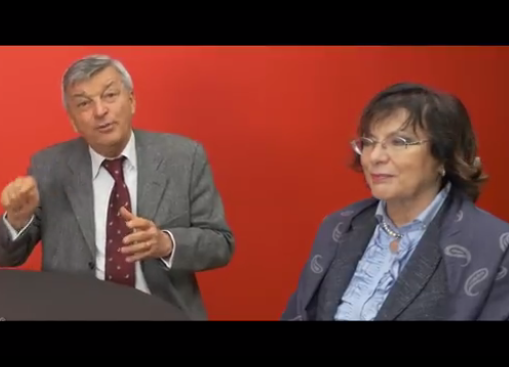


Police raided the laboratory of Dr. Gatti and Dr. Montanari, a married couple who are devoted to studying diseases, including cancer, heart disease and neurological problems, caused by nano-particles that arise from processes that involve high temperature such as manufacturing, waste incineration and car exhaust. Most nano-particles are expelled by the body when inhaled and consumed, but when injected by way of a vaccine, they are able to stay in the body and cause disease. The couple performed a study and found nano-particles polluted all of the 44 vaccines that they tested.
In the 90’s, Dr. Antonietta Gatti discovered the relationship between micro- and nano-particles as well as a great number of pathologies: cardiovascular diseases, many forms of cancer, multiple neurological diseases, and autoimmune diseases. She’s taken part in many international research projects, including the pathologies induced by depleted uranium, waste incineration, food polluted with inorganic particles, and more.





Currently, she is the coordinator of the Italian Institute of Technology’s Project of Nanoecotoxicology, called INESE.
She is also a selected expert of the FAO/WHO for the safety in nanotechnological food, and a Member of the NANOTOX Cluster of the European Commission and the author of a book titled “Nanopathology: the health impact of nanoparticles,” and on the Editorial Board of Journal of Biomaterials Applications and a member of the CPCM of the Italian Ministry of Defense.
Furthermore, her and her husband Dr. Stefano Montanari founded a laboratory called Nano-diagnostics for the evaluation of the pathological tissues of patients, it’s presently at the University of Modena and Reggio Emilia, Italy.
Recently, the Italian police raided their home, the police took all digital assets that were owned by the the two nanopathologists, including laptops, computers, and flash-drives, basically years of work and research.
“Because Gatti and Montanari had taken their research of nanodust and nanoparticles, from in-vivo (performed in a living organism) and in-vitro (performed in a test tube) to what unseen contamination might reside in vaccines in 2016, they came under the microscope of the United States, European, and Italian authorities. They had touched the third rail of medicine. They had crossed the no-go zone with the purported crime being scientific research and discovery. By finding nano-contamination in random vaccines, Gatti and Montanari revealed, for the first time, what no one knew: Vaccines had more than aluminum salts adjuvants, Polysorbate-80, and other inorganic chemicals in them, they also harbored stainless steel, tungsten, copper, and other metals and rare elements that don’t belong in shots given to fetuses, pregnant women, newborns, babies and toddlers developing their lungs, immune and nervous systems.”
The scientists published their work in January of 2017, titled, New Quality‐Control Investigations on Vaccines: Micro‐ and Nanocontamination. If science wasn’t plagued by corruption, an investigation should have started, healthcare agencies would have become involved and vaccine safety policies would have come under intense scrutiny, but that never happened.
Below is a recent interview with the two, done by Surêté Vaccins, the quick description of the video reads,
“Two italian researchers have found nanoparticles are polluting almost all vaccines. The small size of these particles allow them to enter our cells and have a permanent inflammatory effect. Mrs Gatti was about to testify in parliament enquiry on vaccine damages of italian military courses but both researches have been raided by police and all their material has been taken away.”
Nano particles are very small bits of matter, and they can enter into the human body, as the pair of scientist discovered in the 90’s. This is why we have so much published research linking various chemical products, like cleaning agents, to the destruction of human health. These nano particles are produced by waste incinerators, car traffic, and many other different ways. Because they float in the air, we can inhale them, which means they enter our lungs and then enter into the blood within minutes. This leads to a number of problems. These particles are carried by the blood to every district of the body, as they explain in the video below. When they enter into the tissues, the body cannot get rid of them, and so those particles stay there forever and are the cause of various diseases we see today.
They explain how they’ve been analyzing and studying vaccines for the past 15 years.
“Both vaccine and the tissue, which was hit by the particles contained in the vaccines, because we discovered that those vaccines were polluted by particles, those particles were contained equally in the vaccine and in the tissue, so we started to analyze vaccines.”
They go on to explain, with regards to their most recent vaccine study linked above,
“After a while, an Italian University sent us a student for her thesis, and we analyzed 19 different vaccines with her, finding all of them polluted by micro and nano particles. Then we went on analyzing them and now we analyzed about 30 vaccines with many samples of each vaccine, and, we discovered that they were all polluted…”
When all said and done, they analyzed 44 different vaccines. All of them contained these harmful particles, which are foreign bodies entering into the body. Whenever this happens, the body has a reaction, and it’s not good.
“Those foreign bodies, those particles, are like a bullet. If I shoot somebody, and that bullet makes a hole in the heart, it’s not very important if the bullet was made of stainless steel, of titatium, of iron whatever, what’s important is that that they punched a whole in the heart.”
In it, they talk a little bit about the study and what’s currently going on.
Subscribe to:
Posts (Atom)
